3I/Atlas | Alien Tech or Just Space Junk?
Alright, folks, let’s dive into something that’s been tickling my brain – and probably yours too if you’ve been keeping an eye on the cosmos. We’re talking about 3I/Atlas, a visitor from way, way out there. But here’s the thing: is it just another space rock, or could it be something…more? That’s the question we’re going to wrestle with today.
Why 3I/Atlas Has Everyone Talking
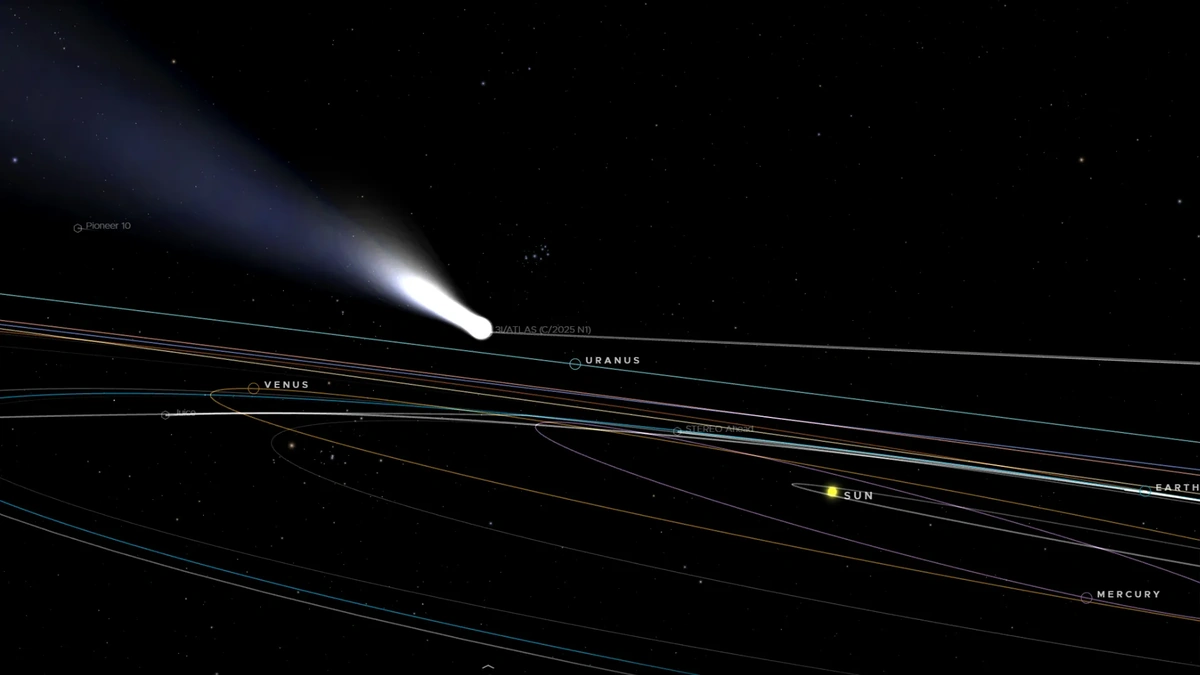
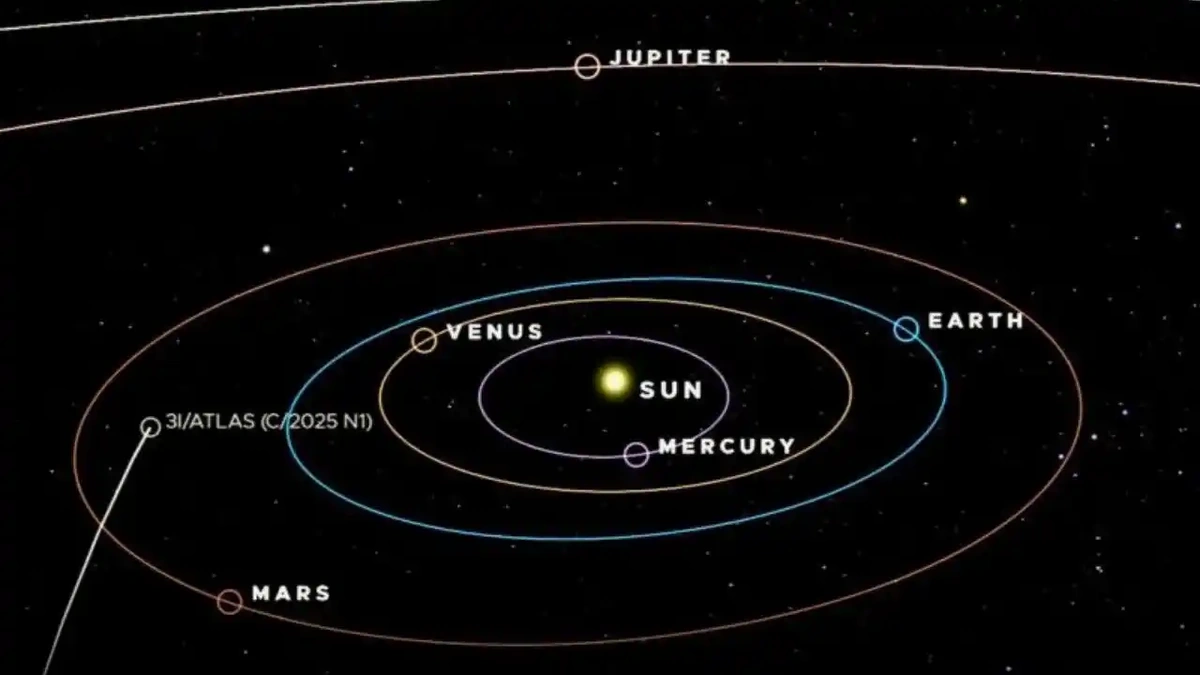
So, why all the fuss about this particular object? Well, for starters, it’s an interstellar object, meaning it originated from outside our solar system. We’ve only spotted a few of these cosmic wanderers, like ‘Oumuamua, and each one is a treasure trove of information. The fact that 3I/Atlas even exists is fascinating, but what truly piques my interest – and should pique yours – is what it might tell us about other star systems.
Think about it: if 3I/Atlas is a typical example of the stuff floating around in other galaxies, it gives us a peek into their formation and composition. But there’s another, more out-there possibility that gets some people’s imaginations running wild: could it be artificial? Could it be some kind of probe or derelict spaceship? Let’s be honest, the chances are astronomically (pun intended!) small, but the sheer possibility makes it worth pondering. The interstellar object generated substantial buzz amongst space enthusiasts.
Decoding the Data | What We Know (and Don’t Know)
Okay, let’s ground ourselves a bit. What do we actually know about 3I/Atlas? Astronomers have been studying it using telescopes around the world, gathering data on its size, shape, composition, and trajectory. Here’s what seems most likely. It’s probably a comet – or at least, comet-like. It’s showing signs of outgassing, meaning it’s releasing gas and dust as it gets closer to the Sun. This is typical comet behavior. But it’s also displaying some unusual characteristics.
For example, its spin rate is quite high, and its composition seems a bit different from comets we’re used to seeing in our own solar system. These subtle differences are what fuel the more speculative theories. Could these anomalies be signs of something artificial? I mean, probably not. But what if they are? The composition of 3I/Atlas is a key factor in deciphering its origins.
The Extraterrestrial Angle | Science Fact vs. Science Fiction
Now, let’s tackle the big question: Could 3I/Atlas be an alien artifact? Before you dismiss this as pure science fiction, consider this: we’re actively searching for extraterrestrial intelligence (SETI), and one of the ways we might find it is by detecting their technology. If an alien civilization were to send out probes, or if some kind of automated system were to break down and keep hurtling through space, we might stumble upon it someday. What fascinates me is , how can we tell the difference between a natural object and an alien artifact?
That’s the challenge. We need to look for signs of artificiality, such as unusual materials, regular patterns, or evidence of propulsion. So far, 3I/Atlas hasn’t shown any of these telltale signs. But as our technology improves, we might be able to analyze it in more detail. The extraterrestrial danger possibility remains a fascinating, albeit unlikely, consideration. Remember when the comet ATLAS shattered? It was truly a sight!
How to Stay Updated on the Latest 3I/Atlas News
Want to keep your finger on the pulse of this cosmic mystery? Here’s how. First, follow reputable space news outlets. Sites like NASA’s website, Space.com, and Sky & Telescope are great sources of accurate information. Be wary of sensationalist headlines and unsubstantiated claims. Second, keep an eye on scientific publications. When astronomers publish their findings, you can often find preprints on sites like arXiv.org. Fair warning: these papers can be pretty technical, but they’re the source of the latest discoveries. The 3I/Atlas news cycle is constantly evolving as new data emerges.
And third, don’t be afraid to ask questions! Join online forums or social media groups dedicated to space exploration. There are plenty of knowledgeable people out there who are happy to share their insights. Just remember to approach everything with a healthy dose of skepticism and critical thinking. According to Wikipedia , interstellar objects are a relatively new area of study.
The Broader Implications for Space Exploration
Regardless of whether 3I/Atlas turns out to be a natural object or something more exotic, its discovery highlights the importance of space exploration. We’re living in a golden age of astronomy, with new telescopes and missions constantly pushing the boundaries of our knowledge. By studying objects like 3I/Atlas, we’re not just learning about other star systems; we’re also gaining a deeper understanding of our own place in the universe. The study of space rocks like 3I/Atlas is crucial for advancing our understanding of the cosmos. The potential discovery of extraterrestrial life changes everything.
And who knows? Maybe one day, we’ll even be able to send our own probes to explore these interstellar wanderers up close. That’s a future worth striving for. But, for now, let’s keep watching 3I/Atlas, keep asking questions, and keep wondering about the possibilities that lie beyond our solar system. The exploration of interstellar objects is key to unlocking the secrets of the universe. Let me rephrase that for clarity, the study of these objects is important.
FAQ About 3I/Atlas
What exactly is 3I/Atlas?
3I/Atlas is an interstellar object, meaning it originated from outside our solar system. It’s thought to be a comet or comet-like object.
Is 3I/Atlas dangerous to Earth?
No, 3I/Atlas is not considered a threat to Earth. Its trajectory takes it nowhere near our planet.
How was 3I/Atlas discovered?
3I/Atlas was discovered by the Asteroid Terrestrial-impact Last Alert System (ATLAS) survey, hence the name.
Could 3I/Atlas be an alien spacecraft?
It’s highly unlikely. While not impossible, there’s currently no evidence to suggest it’s anything other than a natural object.
Where can I find more information about 3I/Atlas?
Check reputable space news websites and scientific publications for the latest updates.
So, there you have it. 3I/Atlas, a cosmic enigma that might just be a rock, but represents the grander possibility of extraterrestrial life. And in a world that often feels small and predictable, isn’t it thrilling to have a reminder that the universe is vast, mysterious, and full of surprises? Keep looking up, folks. You never know what you might see.
About the Author